Growing with Confidence, Exploring with Purpose
The 2–3-year-old years are full of exciting changes. Children become more independent, learn to play harmoniously with others, discover new interests, and begin to find their voices.
Our Preschool Classrooms provide a warm, welcoming environment where preschoolers can embrace these next steps at their own pace. Teachers guide and encourage them as they learn to share, take turns, care for their classroom, and respect the work and space of their friends. With gentle support, preschoolers are empowered to approach new experiences with confidence and ease.
Through hands-on activities, practical life experiences, sensory exploration, language, early math, and creative play, children build confidence while discovering the genuine joy of independent accomplishments.
Parent partnership plays an important role in nurturing a child’s growing independence. We encourage families to support their child’s growing self-reliance by reducing dependence on sippy cups, pacifiers, and constant adult assistance. With consistent encouragement at home and at school, preschoolers discover that they are capable of being independent.
These daily opportunities build confidence, independence, and a genuine sense of achievement—one small step at a time.
Our Preschool Curriculum focuses on 4 vibrant areas of development:
Through play, exploration, and discovery preschoolers build essential skills.
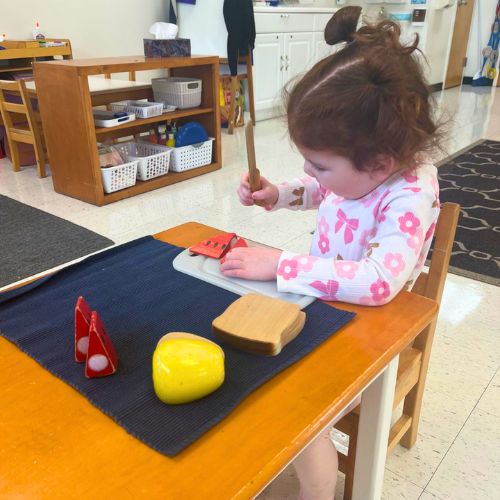
Through thoughtfully designed Practical Life activities, preschoolers develop fine motor control, sustained concentration, and precise hand–eye coordination. With plenty of opportunities to practice, explore, and refine purposeful movements, they become increasingly confident, capable, and self-reliant.
Ongoing peer interactions and creative experiences—including puzzles, beading, spooning, pouring, cutting, gluing, coloring, painting, music and creative movements support both fine and gross motor development. These purposeful activities strengthen focus, attention and coordination, while giving them opportunities to express their individuality and creativity.
As children practice and master these skills, something wonderful happens they begin to believe in what they can accomplish for themselves, by themselves.
Though these activities may seem simple, they build essential life skills and a strong foundation for future academic success and lifelong independence.
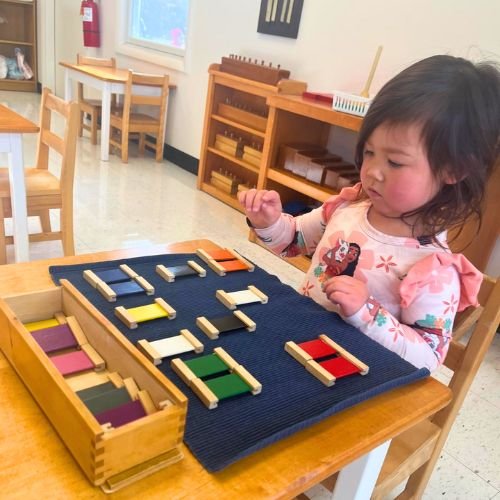
Young children make sense of their world through their senses—touching, looking, listening, smelling, comparing, and discovering. In our Montessori classrooms, specially designed materials invite children to explore differences in size, shape, color, texture, sound, and scent.
Preschoolers may match objects, sort materials, compare sizes, or discover how things are alike and different. These hands-on experiences strengthen observation, concentration, and early reasoning skills while encouraging them to notice details, make connections, and better understand the environment around them.
Sensory Montessori materials also lay a natural foundation for early Math and Geometry. Through exploring shapes, size, space, and quantity, children begin to develop mathematical thinking in a way that feels meaningful and enjoyable.
Children do not learn simply by being taught. They learn by experiencing—touching, exploring, comparing, and discovering for themselves.
Daily experiences with music, storytelling, conversation, and language-rich activities help preschoolers expand their vocabulary, strengthen listening skills, and develop an awareness of the sounds that make up language.
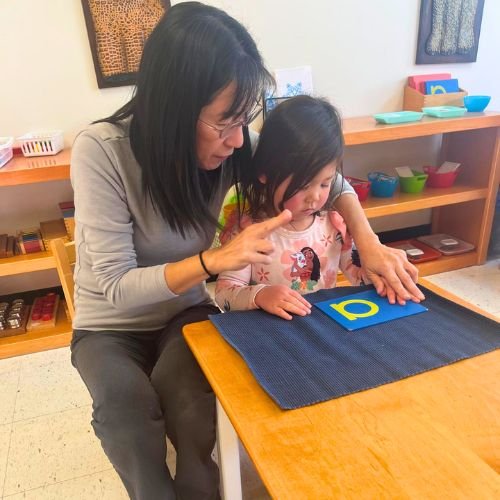
Pre-literacy experiences are naturally woven into the classroom environment. Through singing, memorization, rhyming, and hands-on tactile language materials, children begin to make meaningful connections between spoken and written language. These experiences strengthen auditory memory and lay a strong foundation for early literacy.
At MAV, letter sounds are introduced before letter names, supporting the development of phonemic awareness and helping children recognize and distinguish the sounds within words. Classification activities using familiar objects and pictures encourage children to identify similarities, differences, and patterns; essential skills for organizing language and developing comprehension.
Through these joyful, purposeful experiences, children develop language skills, confidence, and a natural curiosity that prepares them for the exciting journey of reading and writing.
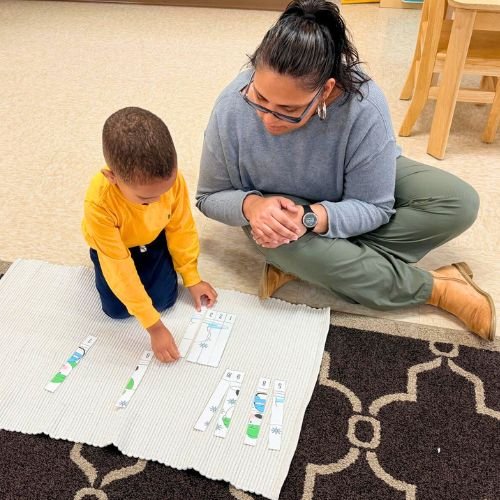
Early math concepts are introduced through hands-on, age-appropriate experiences woven naturally into the daily classroom routine. Activities such as tracing, matching, number puzzles, and recognizing quantities help children develop early mathematical thinking while encouraging curiosity, problem-solving, and purposeful exploration.
As preschoolers demonstrate readiness, they begin developing number recognition by tracing tactile materials, such as sandpaper numerals, while connecting each written symbol to its corresponding quantity. These concrete experiences help children understand that numbers represent real quantities and relationships.
Through carefully sequenced activities, children build a strong foundation for understanding numbers, quantities, patterns, and their relationships. With each new discovery, they develop greater mathematical confidence—one meaningful experience at a time.
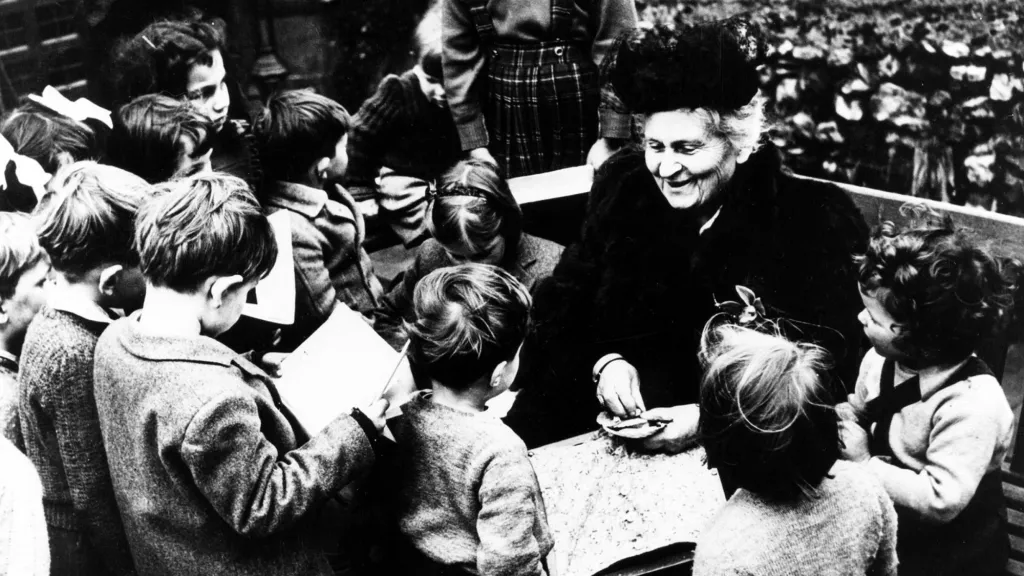
Knowledge is best given where there is eagerness to learn, so this is the period when the seed of all things can be sown, the child’s mind being like a fertile field, ready to receive what will germinate into a culture.