
Upper Elementary Program

Grades 4 - 6

A bridge to Critical Thinking and Momentous Growth

Guiding the Leap to Abstract and Critical Thinking

  • As children move into Upper Elementary, their thinking expands in exciting new ways. They move beyond asking, “What is it?” and begin to explore deeper questions: “Why?” “How?” and “What if?”
  • This pivotal stage of development invites students to think more abstractly, explore complex systems, and use their growing imagination to make meaningful connections across subjects and ideas.
  • With guidance from Montessori-trained teachers, students are encouraged to question, investigate, research, and think deeply. They engage with increasingly challenging academic work while learning to approach problems from multiple perspectives, form their own ideas, and support their thinking with evidence and reasoning.
  • Education at Montessori Acres provides an authentic setting for students to extend their learning beyond the classroom.Through observation, investigation, and hands-on experiences with plants, animals, weather, seasons, and natural systems, students explore real-world questions and apply concepts from Science, Mathematics, Geography, and other areas of study. The farm becomes a place to observe change over time, recognize relationships within living systems, collect information, and apply that knowledge in real-world contexts.
  • As their academic world expands, so does their independence. Students take greater responsibility for planning and managing their work, pursuing areas of interest, beyond their initial lesson, transforming curiosity into deeper investigation and a genuine intellectual engagement.
  • The goal is not simply to know the answer, but to develop the confidence and skills to discover it.

Discovering Self. Developing Character

  • Upper Elementary is also a time of significant personal and social development.
  • Friendships become increasingly important, and students become more aware of themselves, their peers, and the impact of their choices. They develop stronger opinions, begin to consider different perspectives, think more deeply about fairness and responsibility.
  • Our classrooms provide a supportive environment where students learn to communicate honestly and respectfully, navigate disagreements, listen to differing viewpoints, and take responsibility for their actions.
  • Rather than simply stating right or wrong, students are encouraged to reflect on why their choices matter and how those choices affect themselves and others.
  • They begin to understand that being part of a community means more than simply getting along; it means listening, contributing, taking responsibility, and caring for the people around them.

It is a joyful bridge toward adolescence. Our goal is to help them leave this stage of their Montessori journey with capable minds, curious about the world, resilient when faced with challenges, and the confidence to embrace what comes next.

Knowledge is best given where there is eagerness to learn, so this is the period when the seed of all things can be sown, the child’s mind being like a fertile field, ready to receive what will germinate into a culture.
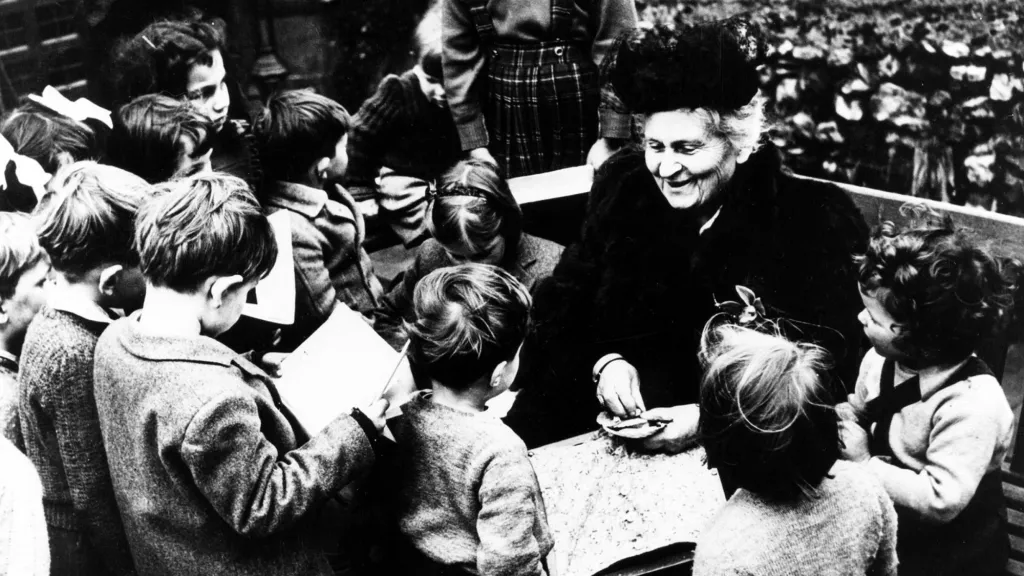
Dr. Maria Montessori