
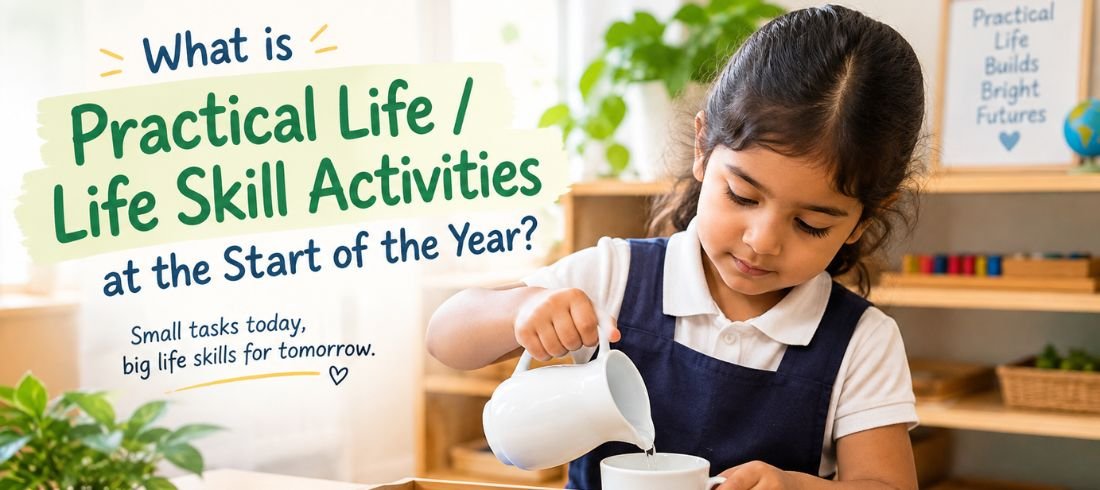
- Increases Focus and Attention: Practical Life activities provide children with uninterrupted opportunities to practice everyday skills such as pouring, sweeping, cleaning, tying, and untying to name a few. These familiar, home-like tasks encourage concentration, improve focus, and gradually build children’s attention span.
- Resets the Mind and Prevents Overwhelm: Young children have boundless energy and often do not recognize when their bodies and minds need a break. Engaging them in familiar Practical Life activities—such as those they have seen their parents do at home—using child-sized equipment and attractive materials in class helps them slow down, become more mindful, and feel a sense of accomplishment. As they successfully complete these meaningful tasks, they develop self-esteem, confidence, and a belief in their own abilities.
- Promotes Mindfulness: Practical Life Activities play a vital role in helping children develop mindfulness. By focusing on one task at a time and engaging in purposeful, hands-on activities, children learn to quiet their minds, stay present, and become more aware of their actions. This growing sense of mindfulness supports emotional regulation, improves self-control, and helps children respond to situations with greater calm and confidence.
- Builds Confidence: Theses Activities help children move from saying, “Mom, I need you!”, “Help me, Mommy!”, or “I can’t do it!” to proudly declaring, “I did it myself!” As they master simple, everyday tasks independently, they develop a strong sense of competence and self-belief. Each small success teaches them that they can overcome challenges, fostering resilience, independence, and the confidence to approach new experiences with a positive attitude—an invaluable life skill that extends far beyond the classroom.
- Builds Independence: As children experience success in completing practical tasks on their own, they begin to trust in their abilities and rely less on adult assistance. This growing sense of independence encourages them to tackle new lessons that are advanced with confidence, make decisions for themselves, and persevere when tasks become more challenging. As a result, they become more willing to explore, take-on advanced lessons, and embrace new learning opportunities with curiosity and resilience.
- Increases Creativity: Practical Life Activities lay the foundation for creativity by giving children the confidence, skills, and freedom to explore their own ideas. As they engage in meaningful tasks, storytelling, art, and imaginative play, they begin to think creatively, solve problems, and express themselves in unique ways.
- Lastly: The confidence gained through these activities inspires poise, independence, rich imagination, and encourages children to create, explore, and be innovate with enthusiasm.
20
Sep